
Cable fitting manufacturer
یراق کابلی چیست؟ تولیدی یراق کابلی به مجموعهای از قطعات و ابزارهای مورد استفاده برای نگهداری، اتصال و محافظت از کابلها در سیستمهای مختلف اطلاق


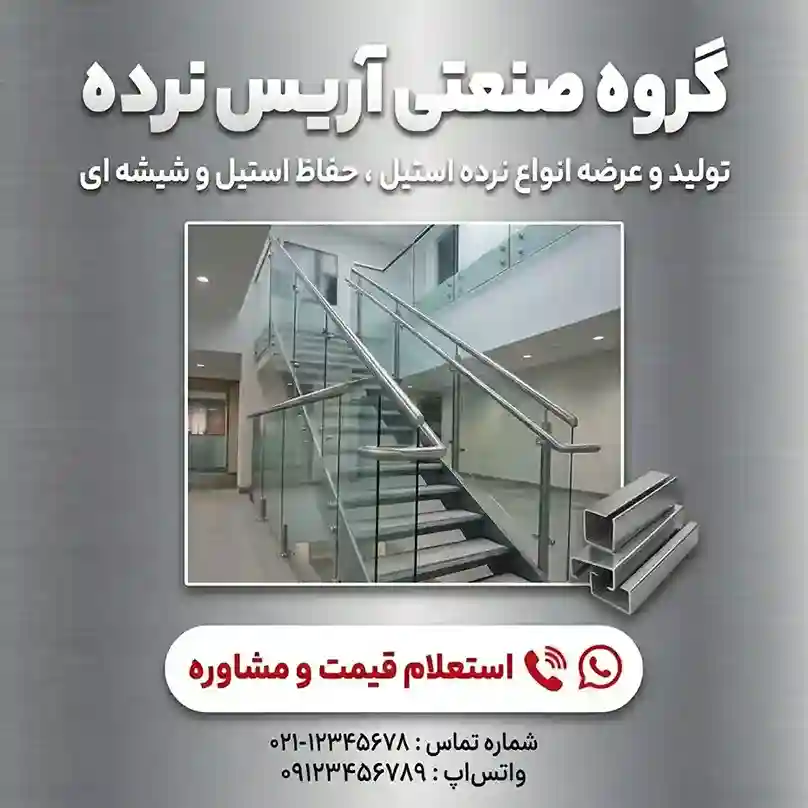
Stainless steel railing is one of Aris Nardeh’s specialist products. Used on staircases in office, commercial and residential buildings, it combines practical performance with a contemporary appearance.
Read more: Stainless steel railing

When choosing a stair railing for home or work, consider both protection and appearance. Cable railings are available in many designs to suit the space.
Read more: Cable railing

Aris Nardeh considers the relevant building completion requirements when designing and installing stainless steel security grilles, wall-mounted barriers, curved guards and related systems.
Read more: Stainless steel security grille
Stainless steel railing is a popular product in contemporary architectural design. Its appearance and practical qualities have increased its use in recent years. The original text estimates that around 90% of newly built properties use stainless railings rather than iron or aluminium alternatives.
Railings need durable, dependable materials. A handrail supports people moving up and down stairs and may be grasped to regain balance during a fall. Stainless steel is used because it combines strength, versatility and long service life.
Stainless steel is widely used for interior and exterior railings. Its combination of strength and appearance makes it suitable for a range of architectural and industrial settings.
Contemporary building design gives careful attention to interior and exterior appearance. Staircases and terraces need protective barriers, making the railing an important part of the architectural composition.
Stainless steel is a widely used modern alloy. In railings, it provides protection on stairs while contributing an attractive finish and resistance to environmental exposure.
Corrosion resistance has made stainless steel an alternative to traditional iron and timber railings. Different grades suit different interior and exterior conditions, with protection for stair and elevated-area users as a primary function.
For a new railing at home or work, stainless steel offers practical benefits alongside appearance and protection. The following points explain some of its main advantages.
Stainless steel is used across many industries because it is durable, formable, attractive and potentially economical. These characteristics make it a useful option for many fabricated products.
How are stainless steel railings installed?
Stainless steel railing installation covers both stairs and balconies. The following sequence outlines the work involved.
Stainless steel stair railing installation stages | Railing installation sequence |
Measurement | Measure and mark the post positions on the stair surface. |
Drilling the fixing locations | Drill the marked locations, checking the hole positions and dimensions carefully. |
Positioning the fixing rods | Place the railing fixing rods in the prepared holes and secure the specified nuts and bolts. |
Checking the work | Check the installed rods and connections; trim excess length where the design requires it. |
Positioning the handrail | Install the main handrail on the prepared post supports. |
Joining handrail sections | Join the handrail sections at the stairwell connection points. |
Checking handrail connections | Check the side fittings that connect the stainless tube to the posts. |
Connecting the 16 mm tube | Connect the 16 mm tube to the handrail posts using the specified screws and 16 mm rings. |
Completing the installation | Install the final handrail at the last landing and complete the remaining end posts. |

Stainless steel is an iron-based alloy containing chromium; the source describes a chromium content of around 10%. Chromium contributes to the corrosion resistance that distinguishes stainless steel from unprotected iron.
As an iron-based material with corrosion resistance, stainless steel is valued for retaining its properties over long service periods. Its structural performance depends on both the alloy and the component design.
Prefabricated components can reduce fabrication and installation time. Many stainless steel railing systems use screwed or riveted connections, reducing site welding and making later servicing easier.
Stainless steel also offers formability and resistance to wear, allowing curved and decorative designs. Its main characteristics are outlined below.
Railing budgets need to balance practical performance and appearance without consuming resources needed elsewhere in the project. Stainless steel can offer an economical solution for homes and commercial spaces when specifications are clearly defined.
Stainless steel can be fabricated in varied dimensions and forms. Straightforward component assembly can also reduce installation work and associated cost compared with some alternatives.


Stainless steel railings serve many applications, including:
1. Staircases
2. Balconies
3. Outdoor areas
4. Protective barriers for balconies, doors and windows


Stainless steel offers several characteristics that make it useful in different building types:
These characteristics support its use in interior and exterior architecture and contribute to the overall appearance of the space.
Railings in busy commercial or industrial spaces may be touched by hundreds of people daily. Stainless steel offers the durability needed for frequent use while providing a dependable protective barrier.
Stainless steel normally requires no routine painting or staining. Suitable cleaning helps retain its appearance, while its strength and durability make it an alternative to timber for interior and exterior railings.
Read more: Buying stainless steel railing
The material’s properties support several practical advantages, described below:
1. Interior and exterior applications: Stainless steel railings can be used inside and outside buildings, with the grade selected to suit the environmental conditions.
2. Wear and scratch resistance : Stainless steel’s resistance to everyday wear makes it useful in lifts and other heavily used spaces.


3. Strength and durability: Its durability supports use in a range of industrial environments.
4. Easy cleaning: Stainless steel railings have surfaces that are straightforward to clean.
5. Appearance and durability: This combination has made stainless steel railings popular in contemporary residential interiors.
6. No routine paint finish required: Stainless steel does not require painting as a basic finish, although compatible decorative coatings can be specified when desired.
7. Straightforward assembly: Many systems use mechanically fixed components that can be assembled with the specified screws and anchors, reducing site fabrication work.
Read more: Stainless steel railing installation
Stainless steel combines strength and long service life. Unlike timber, it is not vulnerable to termites, while its corrosion performance is supported by the selected alloy and finishing process. Its structural properties allow a range of forms and load-bearing arrangements.
Clean, minimalist detailing makes stainless steel railing suitable for both small and large interiors. It can also be combined with glass or timber to create a coordinated architectural appearance.
Before choosing between stainless steel and aluminium, compare the characteristics, benefits and limitations of each system. The table below outlines the comparison.
Stainless steel railing characteristics | Aluminium railing characteristics |
Scratch resistance | Recyclable |
High strength | Load resistance |
Long service life | Strength and long-term durability |
A potentially economical alternative to aluminium railing | Moisture resistance, including humid conditions |
Lower moisture resistance in grade 201 | No site welding or painting required for the specified system |
Poor-quality adhesives and connections can reduce service life | Specialist installation equipment required |
Price is an important part of railing selection. The main cost factors include:
1. Railing length
2. Stainless steel grade
3. Railing design
4. Delivery and installation cost
Material grade is particularly important, with higher-specification alloys generally costing more. The number of horizontal rails also affects material quantities and price.


Steel is based on iron with carbon and other elements. Production involves melting and refining the metal to remove impurities and control carbon content. Unwanted elements are separated through processes that produce slag or gases, creating material with the required strength and working properties.
Steel was once costly to produce. The nineteenth-century Bessemer process reduced costs by blowing air through molten iron so impurities could be oxidised and removed, supporting mass production. Modern refining methods control composition through specialised processes; chromium is added to produce corrosion-resistant stainless steel.
Read more: The history of stainless steel
Its combination of durability and a distinctive appearance makes stainless steel railing an attractive option for many clients.
Stainless steel railings are available in different grades and price ranges. Installation requires suitable experience and skills, and costs vary with both material quality and system design.
Formability allows stainless steel to be made into curved and decorative designs. Chromium supports corrosion resistance, while the material’s strength makes it useful for protective barriers.
Wear and impact resistance are also useful qualities. A suitable grade and finish help address moisture, pollution, sunlight and other exposure conditions, while a smooth surface makes cleaning straightforward.
Read more: Why use stainless steel railings?
Different locations place different demands on a railing. The following sections explain common stainless steel railing applications.


Terrace railings help protect people and objects from falling while contributing to the building’s appearance. Their primary function is as a protective barrier, making correct design and installation particularly important.


Consider the intended use and material characteristics when choosing a railing. The following points can help compare options and costs.
Stairs connect different levels, and the consequences of a fall increase with height. Suitable barriers and handrails are particularly important for children, older people and other vulnerable users.
The potential human and financial consequences of a fall make a protective railing a worthwhile part of the building budget. One practical, attractive option is Stainless steel stair railing . A properly specified installation combines protection with architectural appearance.


of Stainless steel balcony railing Balcony barriers may use metal, glass or stainless steel, selected according to preferences, project requirements and budget. Stainless steel is commonly chosen for its strength and corrosion performance. Appropriate material selection and detailing help provide protection while addressing moisture and weather exposure.
Balcony railing installation shares some methods with stair railings, but the following points require particular attention:


یراق کابلی چیست؟ تولیدی یراق کابلی به مجموعهای از قطعات و ابزارهای مورد استفاده برای نگهداری، اتصال و محافظت از کابلها در سیستمهای مختلف اطلاق
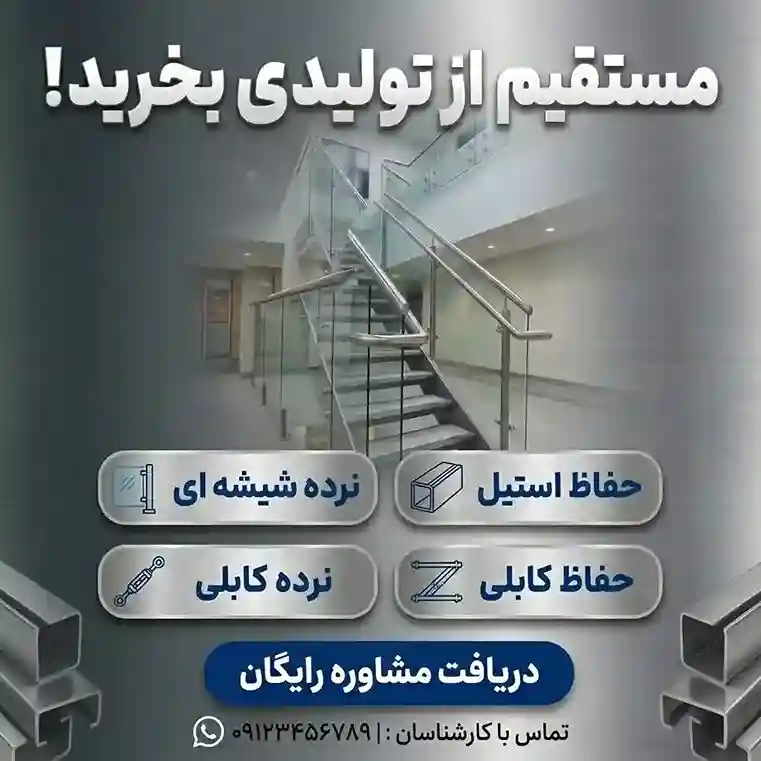
نرده کابلی آهنی: انتخابی استثنایی برای امنیت و زیبایی فضاهای شما نرده کابلی آهنی یکی از جدیدترین و جذابترین انتخابها برای ایجاد حصار و حفاظ

مقدمه و پیشینه شکلگیری نرده کابلی با کلاف آهن نرده کابلی با کلاف آهن در طی سالهای اخیر، جایگاه ویژهای در معماری مدرن به خود

نرده کابلی دوبلکس چیست؟ نرده کابلی دوبلکس، نوعی نرده است که از کابلهای فلزی با ضخامت مناسب، بهطور عمده از فولاد ضد زنگ یا آلومینیوم،

تعریف نرده کابلی راه پله: نرده کابلی راه پله به طور کلی به نردهای اطلاق میشود که در آن از کابلهای فلزی به عنوان عنصر

نرده کابلی مدرن: انتخابی هوشمندانه برای دکوراسیون خانه شما در دنیای امروز، طراحی داخلی و خارجی خانهها تحت تأثیر تکنولوژی و نوآوریهای جدید قرار گرفته

نرده کابلی چیست و چرا محبوب شده است؟ نرده کابلی جدید در واقع یک سیستم نردهای است که از کابلهای فولادی مقاوم برای ساخت ساختار

نرده کابلی بدون فریم چیست؟ نرده کابلی بدون فریم یکی از جذابترین و مدرنترین گزینهها برای فضاهای مختلف است. این نوع نردهها با طراحی مینیمالیستی

نرده کابلی فریم دار چیست؟ نرده کابلی فریم دار ترکیبی از زیبایی، استحکام و کاربردی بودن را در خود جای دادهاند. از یک سو، طراحی


Aluminium railing protects staircase users and is available in many contemporary designs.

Aris Nardeh draws on its experience and technical knowledge to meet customer requirements. Stainless steel railing is one of its main products and services.

Aris Nardeh provides railings to help protect people from falls on stairs and elevated areas.

Railings are an integral part of many buildings. A closer look shows that most homes use some form of railing.
Alloy grade, surface finish, connection details and environmental conditions affect railing performance. Before ordering, document the alloy specification, dimensions, supporting structure and installation scope. Compare quotations on the basis of equivalent specifications and services.
Design and SEO Website: Aladdin intelligent solutions