

Stainless steel railing It is used for various places, of which the staircase is one of its types. Installing stainless steel stair railing It is of great importance in terms of safety because, as a beautiful and modern element, it can significantly add to the design of the staircase and also prevent people from falling and injuring themselves. On the other hand, it must be done by skilled and competent people. There are some important points that help you do this process well and with high safety. The set Aris Nardeh In this article, we have tried to provide you with the necessary tips in full for your convenience.

- Measure the ramps and steps separately; the level difference must be specified in the execution plan.
- Before drilling, check the load-bearing member under the rock and the condition of cracks or voids.
- The type of anchorage, distance from edge and installation depth should be determined from the approved details of the same connection; general stone adhesive is not a substitute for the designed anchorage.
- Write the alloy grade, diameter and thickness of the parts and surface finish in the order; the phrase "quality stainless steel" is not enough for comparison.
- Upon delivery, the connection of the bases, the continuity of the handrail, sharp edges and the traffic path should be checked.
- Leave the implementation of the load-bearing part and its control to an executor with specific skills and responsibilities.
stainless steel 304 for staircase railing; adapt the choice to the environment
Stainless steel 304 is one of the most common grades for railings, but it is not considered the "best material" for all environments. When choosing, consider the installation location, contact with detergents, corrosion conditions, and maintenance schedule in addition to the specifications of the parts. The grade name alone does not indicate the load-bearing capacity of the entire railing.
In the pre-factor, the grade of the base and handle, the wall thickness and the type of finish must be specified. If the project is exposed to salt or corrosive materials, the selection of materials requires a separate review.
How to compare two proposals for installing stair railings?
| Topic | Ambiguous proposal | Reviewable proposal |
|---|---|---|
| supporting structure | Installation on stone without explaining the restraint | The load-bearing member and connection details are clear |
| Parts | Only the phrase "first-class stainless steel" | Grade, section, thickness and finish are written |
| Delivery | Only the installation is complete | Defined route control and troubleshooting list |
If the staircase is old, send a photo of the edge of the step and the connection point along with the length of the ramps. Determination of installation feasibility should be made prior to construction.
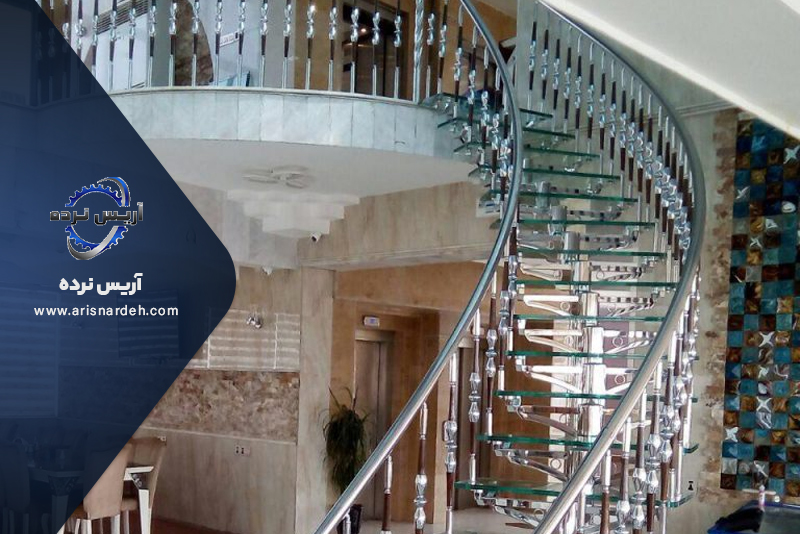
Instructions for installing stainless steel railings on stairs in several steps
In the following steps Installing stainless steel stair railing has been explained to you. Before any installation, you need specialized tools such as a profile cutter, meter, drill, and also auxiliary tools to do the job so that there is no obstacle to the work.
- The first step
The first step requires high accuracy and it is necessary to measure the desired length of the ramp with high concentration and in meters and purchase the amount of railing required for it.
- Second stage
Determine the location of the supports on the map and then on site. The distance between the supports, the distance of the anchor from the edge and the depth of the hole are not the same for all stairs; these depend on the geometry, supporting structure and selected connection. Before execution, check the position of the holes, the load-bearing member and the interference with the edge of the stone.
- Third stage
After confirming the height and cutting plan, the base parts are prepared. The pipe diameter and internal rod specifications must be consistent with the railing design; one common size is not the construction order for all projects. The base anchor is executed according to the selected connection specifications and the role of the surface stone should not be confused with the load-bearing member below it.
- Fourth stage
Before loading or continuing the installation, the time and conditions required for the connection made must be observed. If chemical anchor is selected, the hole preparation, setting time and application temperature follow the instructions of the same product. Then the handrail is installed with the predicted connections and the continuity of its path is checked.
- Fifth stage
Infill sizes, quantities and connections must match the selected railing and approved drawing. Common sizes from one model do not apply to every railing. See the stainless railing specification guide when preparing the order list.
- Sixth stage
At landings and changes of direction, review handrail continuity and the compatibility of elbows or connectors with the railing model. Corner fittings, caps and infill serve different roles; identify each in the component list and drawing.
- Seventh stage
At the end of a run, define the wall connection or end-post anchorage in the project design. Before handover, inspect starts, ends, connections and caps with the installer. A generic wall connection is not mandatory for every model.
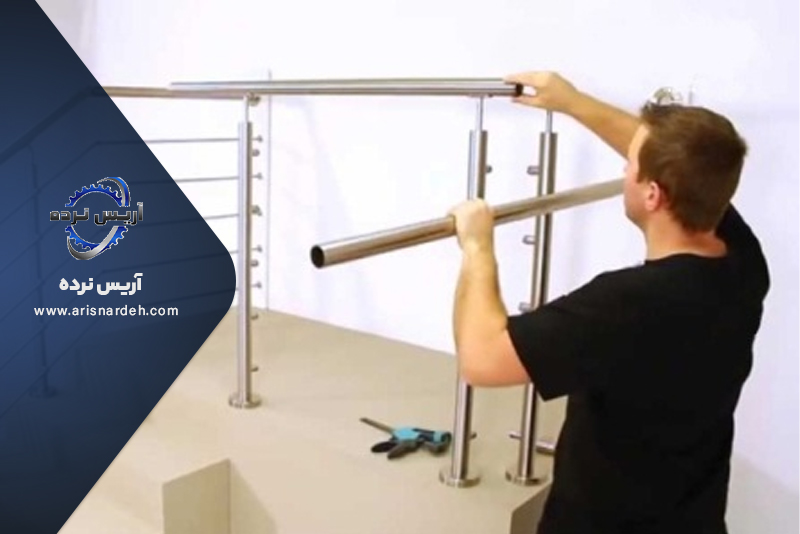
To request stainless stair railing installation, prepare each flight length, landing count, city and photos of connection locations. The quotation should identify grades, sections, anchorage, transport, installation and surface repairs. Aris Nardeh has worked in railing since 1393 SH. View the railing portfolio and submit site information with your stainless railing installation enquiry.
Short answer about stainless steel railing installation tips
To install stainless steel railing for stairs, make three decisions before construction: the connection location to the load-bearing member, the specifications of the base and handrail, and the continuous path of the handrail on the ramp and footboard. Comparable costs are achieved when the removal, construction, restraint, installation, and repair of the connection location are clear in the two proposals.
Staircase handrail delivery checklist
| Topic | What to check? | Required output |
|---|---|---|
| supporting structure | Material of the load-bearing member and the condition of the crack or void | Photo and connection details before covering the base |
| Handrail path | Ramp and step continuity | No sharp edges, no handholds, and no loose connections |
| Base restraint | Anchor type and installation specifications | Registration of the connection product and installation conditions |
| Delivery | Complete route control with the contractor | List of defects and their correction plan |
Practical questions
Is stone glue enough to install railings?
The connection and supporting structure must be examined for the answer. Stone glue cannot be considered a substitute for designed restraint without technical specifications.
Is the distance between the bases the same in all staircases?
No; the geometry of the ramp, the type of filler and the strength of the base and connection are effective in determining the distance.
What should we send for installation inquiries?
Send the approximate length of the ramps, the number of treads, the city of the project and a few clear photos of the edge of the stairs and the connection point.
Next steps and related guides
Technical source for further reading: Guide to design reinforcement in basic materials — Hilti. The details of each system should be reviewed for the specific project.
One response to "Tips for installing stainless steel stair railing"
[...] We also see the tips for installing stainless steel railing stairs [...]