
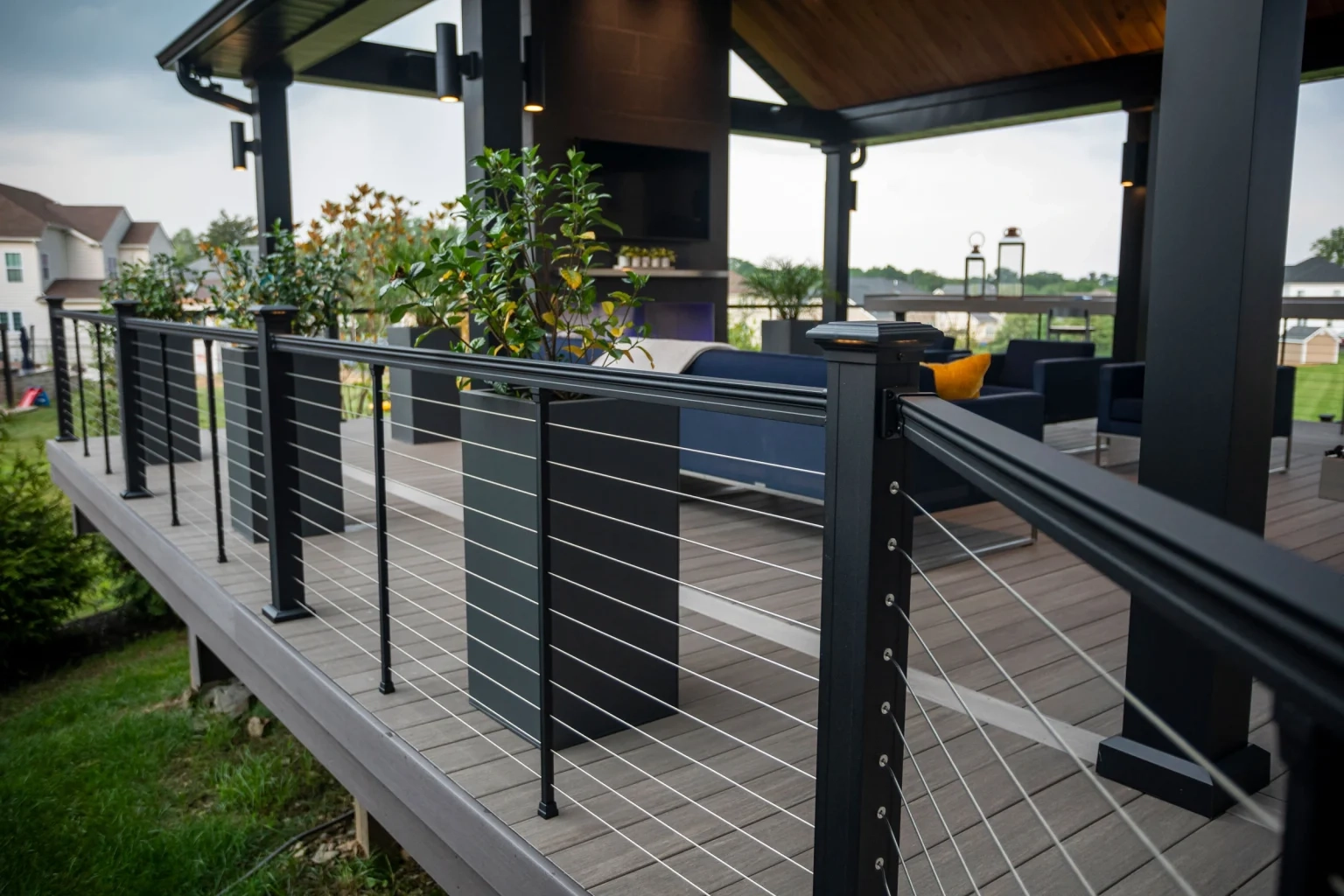
Introduction and background of the formation of cable railing with iron frame
Cable railing with iron frame has occupied a special place in modern architecture in recent years. If we look back, the idea of using metal cables in railings was first proposed in the marine and bridge industries; where the cable had to resist pressure and climate changes. Since then, the idea of pulling steel cables between metal or concrete columns to ensure safety was formed. Gradually, architects and interior designers paid attention to this technology and combined it with iron structures and stainless steel coatings. Thus, cable railing entered the architectural space from industrial fields and now has a strong presence in residential, commercial and public spaces.
Technical principles and key components of cable railing
Cable railing with iron frame consists of several important components, each of which plays a vital role in the final strength and beauty. The first part is the iron or steel bases that are installed at certain intervals and act as supporting columns. Then, stainless steel cables are stretched between these supports and are tensioned with special clamps. Stainless steel cables are often considered an ideal option due to their resistance to moisture and rust. Along with the cable and base, there are steel or galvanized fittings and railing hardware that ensure the stability and integrity of the overall structure of the railing.
Painted iron frame or steel frame; what should we measure?
| Criteria | Painted iron frame | Stainless steel frame |
|---|---|---|
| Construction and appearance | Check welding and coating details | Specify the grade and surface finish |
| Maintenance | Access is important for repairing the coating | Cleaning method and environmental conditions are important |
| Cost comparison | Construction, coating and installation are seen together | Materials, construction and installation are seen together |
Specify the length of the spans, changes of direction and cable connection details in the coil inquiry. The selection of the frame and hardware should be done simultaneously to leave the necessary space for the connection adjustment.
Main advantage: combining security and transparency
One of the reasons architects are interested in cable railing with iron frame is to maintain security and visual transparency at the same time. In traditional railings such as lattice iron fences, the space behind the railing is often completely covered, giving the viewer a sense of closure. However, in a cable system, the distance between the horizontal or vertical cables is such that the eye can see the space behind the fence well. This is especially important on terraces or balconies with beautiful views; because by installing a cable railing, the view is seen without serious obstacles and people will still benefit from the security of the balcony.
What is cable railing and how does it work?
Cable railing It is a modern and sturdy type of guardrail that is made of a combination of stainless steel or galvanized cables and an iron frame. These cables with high tensile strength are placed inside the iron frame and secured with special fasteners. The design of this type of railing is such that in addition to maintaining safety, it does not limit visibility and gives various spaces a modern and attractive appearance. This type of railing is used in indoor and outdoor spaces due to its special style. In open environments such as terraces, balconies and villa landscaping, cable railing with an iron frame is an excellent choice because it is both resistant to weather conditions and allows light and air to pass through easily. Also, in indoor stairs and railings, this type of guardrail can create a luxurious and stylish appearance and coordinate with other architectural elements.
Components of cable railing with iron frame
One of the most important components of this type of fence, Resistant steel cables which play a major role in providing strength and security. These cables are usually made of stainless steel or galvanized steel, which are highly resistant to adverse weather conditions, such as moisture and corrosion. The tension and thickness of the cables are selected according to the type of application to ensure both beauty and functionality.Iron frame As the main frame of the railing, it is responsible for holding and fixing the cables. This frame is made of durable iron or strong metal profiles to bear the weight of the cables and strengthen the overall structure of the railing. The type of design and thickness of this frame depends on the installation location and environmental conditions and is usually protected with oven paint or galvanized coating. Another important component of this railing is Fasteners and special railing hardware are used to hold the cables and connect them to the frame. This railing hardware should be made of a durable material, such as stainless steel or galvanized alloys, to withstand pressure and environmental factors. Also, Metal bases They play an important role in the design of cable railing and, as supporting columns, ensure the overall stability of the system. Depending on the design, these bases can be made of iron, steel or a combination of resistant metals.
Materials and materials used in cable railing with iron frame
Stainless steel cables
One of the key components in the construction of cable railing with iron frame is stainless steel cables. These cables are made of durable steel that is resistant to adverse weather conditions, moisture and mechanical stress. The use of stainless steel cables not only increases the durability of the railing, but also maintains its beauty and visual clarity. In addition, steel cables can be selected in different thicknesses to provide the right strength depending on safety and design needs.
Galvanized iron
Another part of these fences is galvanized iron, which plays an important role in increasing the lifespan and preventing rust. The iron frame in this type of fence is usually reinforced with a hot-dip galvanizing process or other protective coatings to prevent corrosion from moisture and harsh environmental conditions. This type of coating ensures that the fences remain undamaged and uncolored, even in areas with high humidity or adverse weather conditions.
Protective coatings
For increased durability and beauty Protective coatings Various coatings are applied to galvanized iron and steel cables. These coatings include oven-baked paints and electrostatic powders, which, in addition to providing a protective layer, improve the appearance of the fence. These coatings make the fence surface resistant to scratches, impacts, and direct sunlight, reducing the need for constant maintenance and painting. In addition, custom colors allow the fence to coordinate with various interior and exterior design styles.
High durability and longevity
Another important point in choosing the material, Their high durability and longevity is. Choosing high-quality materials not only increases the lifespan of the railings, but also reduces maintenance costs in the long run. The right combination of resistant materials, the use of modern coating technologies and compliance with quality standards make cable railing with iron frame a safe, beautiful and cost-effective option for residential, commercial and public buildings. The choice of cable material and the type of coating on the iron frame has a direct impact on the lifespan and maintenance costs of the railing. Typically, stainless steel is the most popular in the cable section due to its corrosion resistance. On the other hand, iron profiles can be used for the main skeleton or frame, which are resistant to moisture and rust with a baked or electrostatic paint coating. Depending on the climatic conditions of each region, the thickness of the coating or protective processes may vary. For example, in humid northern or coastal areas, the use of hot-dip galvanized profiles or multi-layer paints can prevent premature wear

Advantages of using cable railing with iron frame
Cable railing with iron frame is very efficient in terms of safety; because the resistant steel cables along with the iron frame provide a high level of security. However, one of the most important advantages of this protection system is maintaining visibility and ambient light. Due to the open design of the cables, the space enclosed by this type of railing will not feel closed. In addition, the use of stainless and galvanized materials makes the railing resistant to adverse weather conditions, humidity and climate changes and has a long useful life. On the other hand, cable railing with iron frame is very easy to maintain and does not require constant painting; because protective coatings such as oven paints or electrostatic powder prevent scratches and rust. These features reduce maintenance costs over time. In addition, the modern and minimalist design of this type of railing makes it ideal for luxurious and modern spaces. The ability to combine it with materials such as glass and wood creates a stylish and harmonious look and helps to further beautify the environment. Another important advantage of these railings is their lighter weight compared to traditional iron railings, which makes it easier to install and reduces pressure on the structure. Also, the minimalist design of these railings allows them to be used in modern spaces and can be combined with materials such as wood and glass. This combination can give a different and beautiful look to residential and commercial spaces.
Applications of cable railing with iron frame in architecture
Cable railing with iron frame is very popular in residential and commercial buildings, especially in spaces that require a modern yet safe look. Balconies and terraces in residential towers or office complexes can be equipped with this type of railing to maintain visibility and visual access to the outside landscape, while also ensuring the safety of residents and employees. Similarly, in villas and landscaping, the use of cable railing gives a luxurious and unique look to the outside space. Combining it with materials such as wood or concrete preserves the beauty of green spaces and walkways while remaining strong and durable for years to come. Installing cable railing with an iron frame in public spaces such as parks and bridges also has several advantages. In addition to preserving natural or urban views and views, this type of railing is reliable in terms of safety and strength and requires less maintenance. In spaces such as staircases in tourist centers, educational buildings, pedestrian bridges and amusement parks, cable railing is an ideal option for combining beauty and security. Also, in high-traffic urban areas, its simple and minimalist design helps maintain the visual integrity of the space while facilitating the flow of air and light.
Installation process and specialized execution
Installing cable railing with an iron frame requires expertise and experience, as the exact spacing of the columns must be calculated and the cables must be properly tensioned. If the tension is not sufficient, the cables will loosen over time, reducing their visual beauty and safety. Similarly, if too much pressure is applied, the connections or cables may be damaged. Special attention should also be paid to the angle of the cables and how they are placed at the corners of the railing. Experienced contractors usually use special tools and laser levels to ensure proper alignment and tension so that the final result is completely eye-catching and safe.
Compatibility with various architectural styles
Contrary to popular belief, cable railing with an iron frame is not only suitable for very modern spaces; it can also be combined with different styles. For example, in rustic or traditional design, patterned iron frames and cables with special colors can be used to create a look close to the classic style. In industrial environments (Industrial Style), simple and neutral colors such as gray and black are used for the metal frame to maintain harmony with other metal components of the space. Also, in minimalist styles, these railings have a special place due to their simplicity and visual elegance. High adaptability and variety in design have made cable railing with an iron frame popular in various projects.
Widely used in public and private spaces
Whether in public parks and pedestrian bridges or in residential and commercial buildings, cable railing with iron frame is widely used. In public spaces, resistance to wind, dynamic loads and various weather conditions is important. Cable railing meets this need with its sturdy structure and at the same time gives a modern look to the area or structure. In private villas, this type of railing is often used on terraces and around pools to maintain visibility and create a sense of openness. This system can even be used in internal staircases of houses or multi-storey complexes to both visually make the space appear larger and to allow light to pass between floors.
Costs and Economic Considerations
The initial cost of implementing cable railing with an iron frame is usually slightly higher than traditional railings. The reason for this is the use of stainless steel in the cables and the need for precise and specialized installation. However, in terms of lifespan and maintenance costs, this type of railing appears more economical in the long run. Because the protective coatings on the iron frame and the stainless steel material of the cables prevent rust and premature failure. Also, if implemented correctly, there is little need for periodic repairs and only controlling the pressure of the cables at a certain interval is sufficient. By comparing the useful life and possible repair costs in the future, investing in this type of railing seems logical.
Possible challenges and suggested solutions
Along with all the advantages, cable railing with iron frame may also face challenges. One of these challenges is the loss of cable tension over time, which can be solved with regular monitoring and readjustment. It must also be ensured that children cannot easily pass through or climb over the cables; therefore, the cable spacing must be determined according to safety standards. If installed in areas with high humidity, periodic inspections are necessary to detect possible rust spots. Choosing high-quality fittings and railing hardware made of stainless steel or galvanized is another solution that reduces the risk of wear in harsh weather conditions.
Summary and future outlook
Overall, cable railing with iron frame provides a combination of beauty and strength. This type of railing is not only used in contemporary constructions with luxurious and minimal styles, but also in traditional or industrial projects due to its compatibility with different materials. With the advancement of metal coating technologies and cable engineering design, this protective system is expected to develop further in the future and new products with special features will be launched on the market. Ultimately, choosing cable railing with iron frame is a long-term investment that, while providing appropriate security, doubles the visual beauty of the environment and brings satisfaction to the residents or users of the space.
Short answer about cable railing with iron frame
Cable diameter and construction, post spacing, end connections and tension control must be considered together. Supporting structure and user safety, particularly the climbability of horizontal cables for children, influence system selection.
Don't judge an iron frame by its final color alone
| Topic | What to check? | Required output |
|---|---|---|
| Frame | Section and details of corners | Examination of deformation and force direction |
| Hardware | End type and adjustment space | Access after installation |
| Cover | Preparing and repairing the connection | Process description and maintenance |
| Delivery | Cable connection and adjustment control | Initial condition record and inspection schedule |
Practical questions
Does the frame become stronger by tightening the cable more?
Tension should be adjusted according to the system specifications. Arbitrary increase in tension can increase the force on the frame and the connection.
Does powder coating solve all corrosion concerns?
The quality of preparation, edges, welds and repair of coating damage also play a role; the name of the coating alone is not enough.
Which part changes the price the most?
Inquire separately about the section and length of the coil, the number of corners, hardware, and the method of covering and installation to clarify the contribution of each part.
Next steps and related guides
Technical source for further reading: Instructions for installing cable in a metal frame — Feeney. The details of each system should be reviewed for the specific project.