
Glass railing and contemporary handrails | Buying and prices
Aris Nardeh manufactures, supplies and installs glass railing systems, including surface-mounted, recessed, spigot and point-fixed designs, using tempered and laminated safety glass, with fire safety approval described in the project specification.
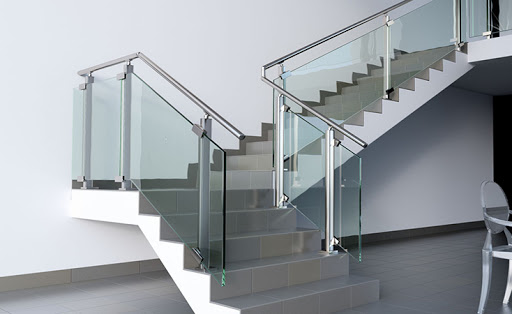
Why choose glass railing over other railing systems?
Glass railing combines structural strength with open views, contributing to protection, architectural character and natural light:
- Panoramic views: Open sightlines on balconies, roof gardens and staircases.
- Laminated safety glass: Impact resistance with an interlayer that helps retain broken glass fragments.
- Moisture resistance: A glass surface that does not rust and needs no routine repainting.
- Fire safety completion approval: A system specified to meet the relevant engineering approval requirements.
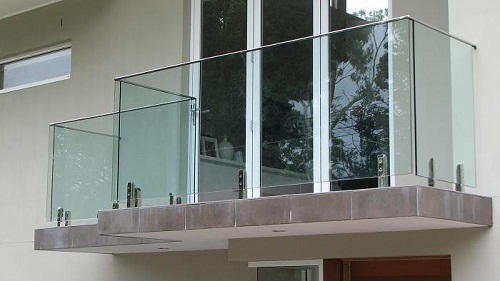
Glass railing installation systems
1. Surface-mounted glass railing
Aluminium retaining profiles are installed on the finished floor and covered with aluminium trim.
- Fast installation without removing the floor finish
- Wind resistance for balconies and roof gardens
2. Recessed glass railing
The support profiles are recessed into the floor, leaving a clean, continuous glass plane visible.
- A refined appearance without exposed metal on the floor
- Suited to contemporary buildings and floating stairs
3. Spigot-mounted glass railing
Glass panels are secured by grade 304 or 316 stainless steel spigots or clamps.
- A gap below the glass allows water to drain
- Suitable for villa and pool surroundings
4. Point-fixed glass railing
Stainless steel point fixings attach the glass to the fascia or side of the staircase or balcony.
- Preserves the usable floor area
- A floating appearance for curved and duplex stairs
Project gallery and completed installations

Balcony glass railing and stainless steel handrail
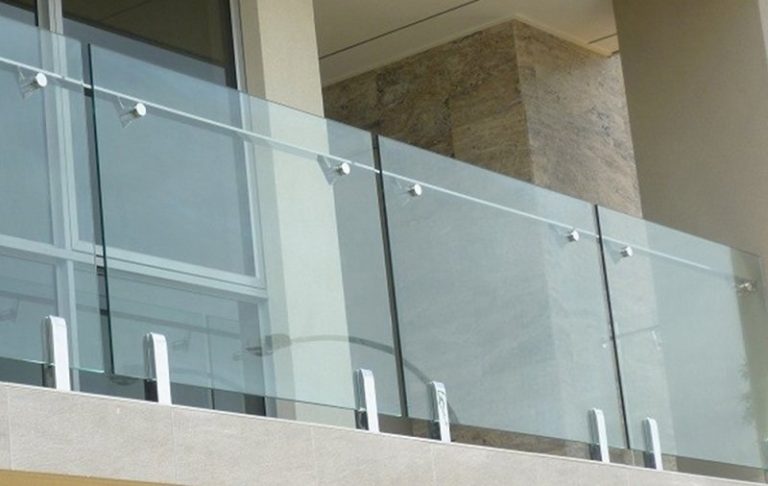
Tempered laminated glass railing with strong supports
Comparing tempered and laminated glass for railings
| Glass type | Specified thickness | Safety characteristics | Suggested application |
|---|---|---|---|
| Single-layer tempered glass | 10 and 12 mm | Moderate — breaks into small fragments | Interiors, partitions and low-level applications |
| Double-layer laminated glass with PVB | 8+8 mm and 10+10 mm glass layers | High — interlayer retention after breakage | Terraces, balconies and roof gardens requiring fire safety approval |
Price guidance and current quotations
| Glass railing system | Glass specification | Fittings | Price status |
|---|---|---|---|
| Exposed surface-mounted aluminium system | 8+8 mm tempered laminated glass | Heavy-duty 6063 aluminium profile | Current pricing — call / WhatsApp |
| Concealed recessed system | 10+10 mm low-iron laminated glass | Recessed aluminium U-channel | Current pricing — call / WhatsApp |
| Stainless steel spigot system | 12 mm tempered glass / laminated glass | Grade 304 / 316 stainless steel spigots | Current pricing — call / WhatsApp |
| Point-fixing system | 8+8 mm tempered laminated glass | 50 mm stainless steel point fixing | Current pricing — call / WhatsApp |
Glass railing buyer FAQs
Can glass railings resist impact and strong winds?
Tempered laminated glass used with appropriate support profiles can resist wind and impact loads. The laminated interlayer helps retain fragments if the glass breaks.
How do surface-mounted and recessed glass railings differ?
In a surface-mounted system, the retaining profile sits on the floor beneath a cover. In a recessed system, the profile is hidden within the floor build-up for a minimal all-glass appearance.
Can glass railing meet fire safety approval requirements?
The original specification calls for double-layer tempered laminated glass and a 110 cm barrier height to support fire safety completion approval.
Aris Nardeh Industrial Group
Manufacturer and installer of stainless steel, glass and cable railings and contemporary handrails
📍 Factory and office address: No. 60, Esteghlal Street, Qods Street, 45-metre Enqelab Avenue, Shahr-e Qods, Tehran
All rights reserved by Aris Nardeh Industrial Group.
Quick answer: glass railing
Select glass type and thickness according to panel dimensions, restraint method, supporting structure and design loads. The interlayer type and post-breakage performance must also be addressed in the project specifications.